

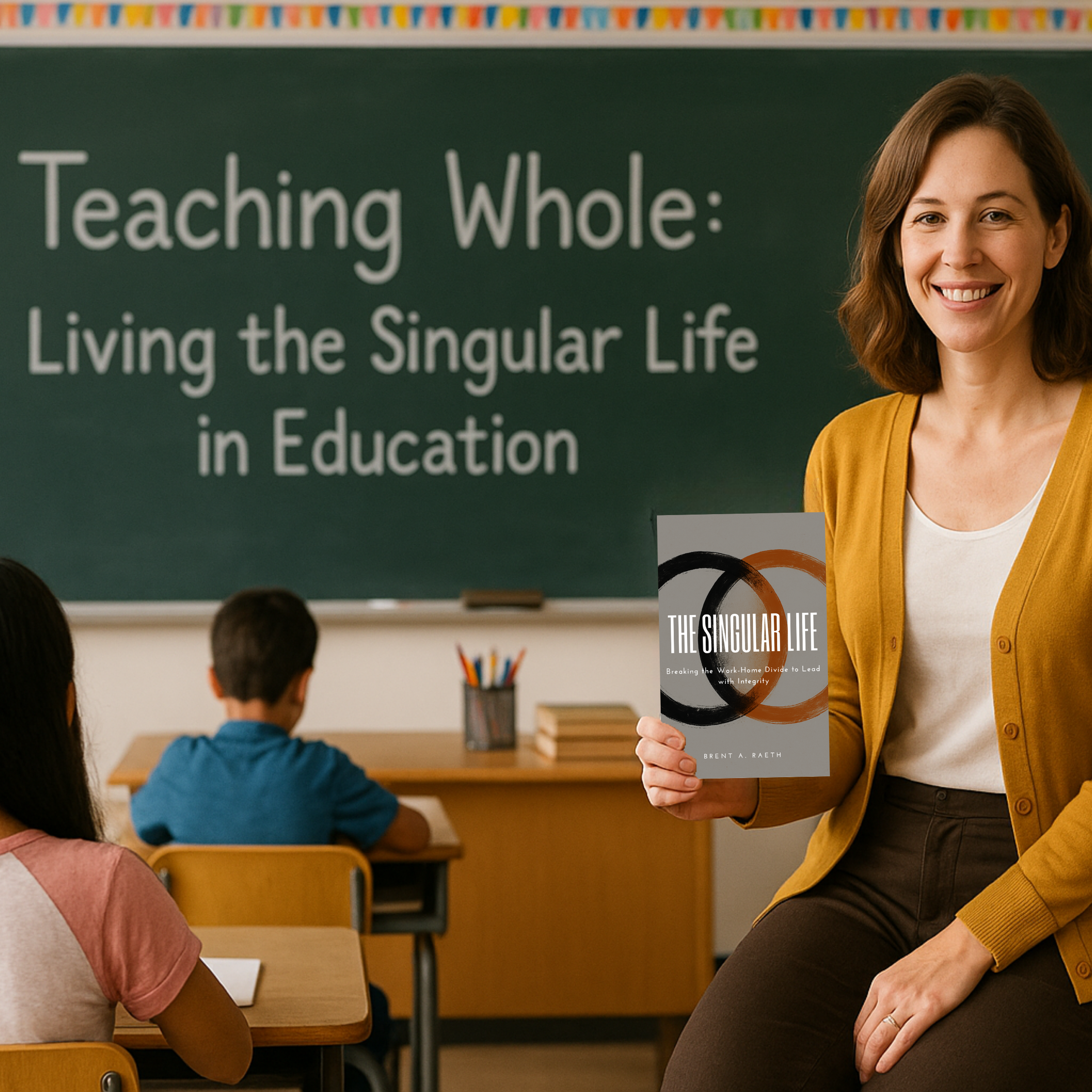
Education has always been about more than information. It’s about transformation, the shaping of minds, hearts, and futures. Yet in today’s educational climate, teachers, administrators, and even students often find themselves pulled in a hundred directions, trying to be everything to everyone. The result is burnout, disconnection, and a sense that what once felt like a calling has become a burden.
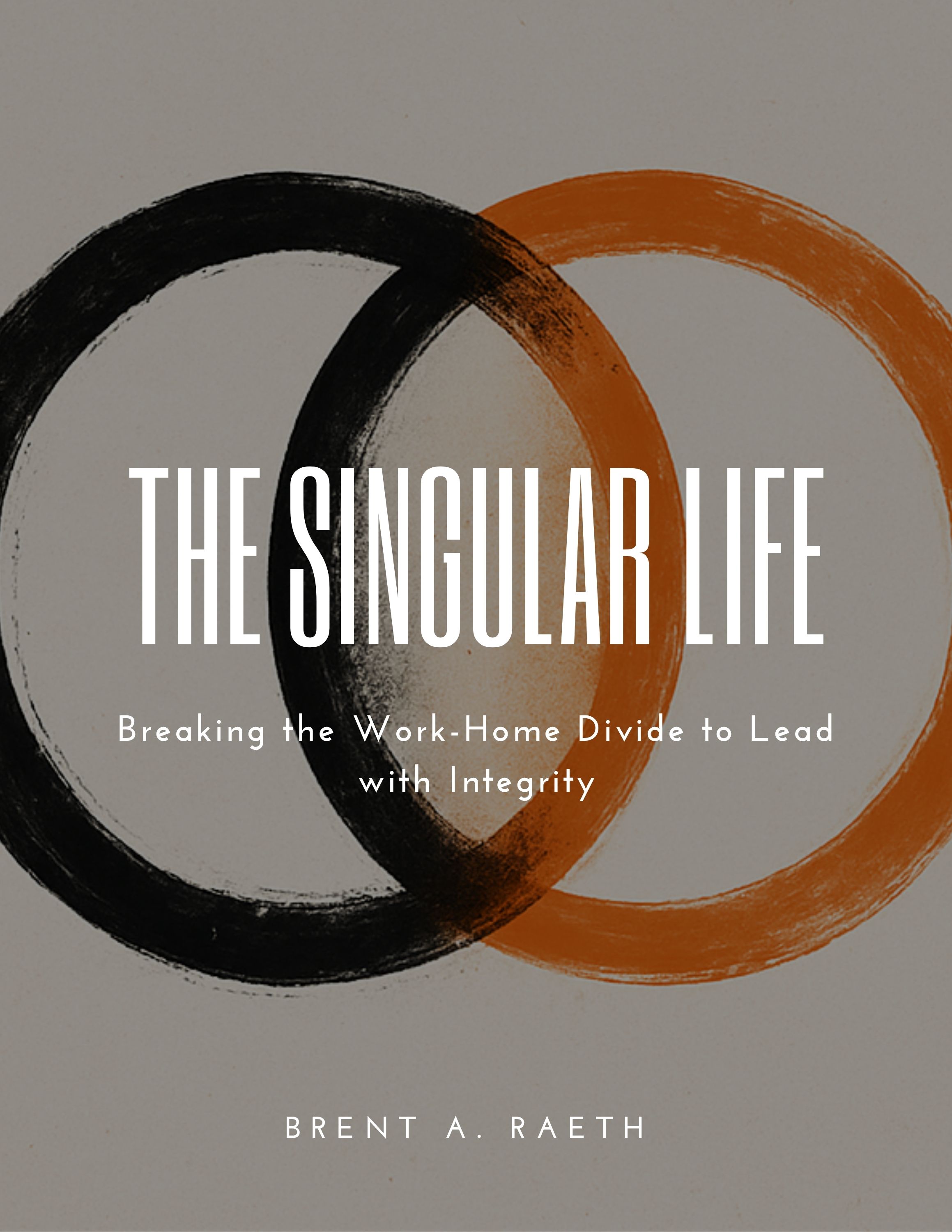
In The Singular Life, I wrote about the danger of living fragmented, of being one person at work, another at home, and yet another in private. For many in education, this split is especially painful. The expectations placed on educators are immense: teach, mentor, discipline, inspire, comply, assess, and somehow stay joyful through it all. The more divided we become between who we are and what the system demands, the further we drift from the wholeness that drew us to education in the first place.
The Cost of the Split Life in Schools
When teachers live divided, students feel it. When administrators lead divided, staff feel it. The culture of a school is a mirror of the people within it. You can’t preach authenticity to students if the adults around them are constantly performing. You can’t model balance if your days are filled with exhaustion masked by forced enthusiasm.
A “split life” in education looks like:
- Smiling in the classroom while crumbling in private.
- Talking about social-emotional learning without practicing it personally.
- Leading with policy instead of purpose.
- Measuring success by test scores while ignoring relationships.
These are not failures of individuals. They are symptoms of a system that rewards compliance over connection.
The Wholeness Revolution
The Singular Life calls for a different way: a life of wholeness, where who you are is consistent across every role you play. Imagine if educators lived with that kind of integration, where the same authenticity you bring to your students is the same integrity you bring to your colleagues, your community, and your family.
Wholeness in education means:
- Teaching from who you are, not just what you know.
- Bringing the same compassion to yourself that you extend to your students.
- Leading with transparency, even when it’s uncomfortable.
- Creating classrooms where it’s safe to be real, for both teacher and student.
It’s not about being perfect; it’s about being the same person in every space you enter.
Building Singular Schools
Schools that embrace wholeness don’t just improve test scores; they transform lives. They cultivate belonging, trust, and purpose, all of which are foundational to true learning. When a school operates as a “singular organization,” its values align from the classroom to the boardroom. Conversations become more honest. Collaboration becomes more natural. Burnout gives way to fulfillment because people no longer feel they have to split themselves to fit in.
This starts with leaders who are willing to go first. Principals, superintendents, and teachers who choose authenticity over image create a ripple effect. Students learn not just math or science; they learn what integrity looks like lived out in real time.
A Call to Educators
If you’re an educator, The Singular Life isn’t another self-help book. It’s an invitation. It’s a reminder that your greatest gift to your students isn’t your lesson plan; it’s your wholeness. You can’t give what you don’t have.
You don’t need to fix everything overnight. Start by aligning your life one space at a time. Speak truth even when it costs comfort. Set boundaries that protect your joy. Model a kind of living that teaches not just content, but character.
When educators live whole, students learn whole. And that’s how we begin to heal our schools, not with more programs, but with more authenticity.
Leave a Reply